
How an aged care quality audit works
A simple guide to the aged care audit process: who runs it, the three stages, what assessors look at, and how each Standard is rated.
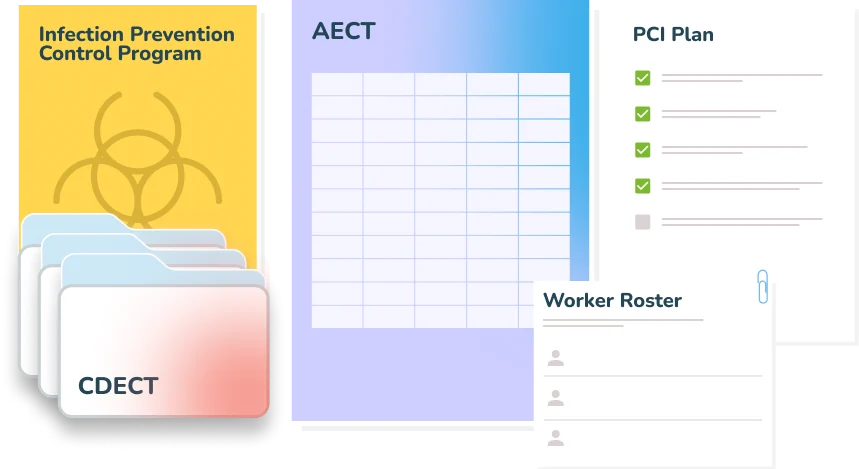
An aged care quality audit is how the Aged Care Quality and Safety Commission checks whether a provider meets the Strengthened Aged Care Quality Standards and is delivering safe, quality care. It is not a single surprise inspection: it runs as an announced program of activities across three stages, initiation, delivery and reporting. This guide walks through each stage, so you know what to expect and how to be ready.
When does an audit happen?
The Commission audits a provider when they apply to:
- register as a provider in categories 4, 5 or 6 (a registration audit),
- renew their registration in those categories (a renewal audit), or
- vary their registration to add a category 4, 5 or 6 service (a variation audit).
Categories 4, 5 and 6 are the categories that involve personal care and clinical care, including residential care. Audits are announced, so you will know when yours is happening and can make sure the right people are available. In Coverage, the mode you are being assessed under (Registration, Renewal or Variation) is set in what your provider is working towards, and your service categories determine which parts apply.
What an audit is really checking
An audit looks at whether you can conform with the Strengthened Aged Care Quality Standards, the seven Standards under the Aged Care Act 2024. In practice, assessors focus on four things:
- your governance arrangements,
- your systems and processes for delivering care,
- the experience and outcomes for the older people you support, and
- whether safe, quality practices are consistent across your services.
Importantly, audits look forward. They are less interested in a one-off snapshot and more in whether your systems are embedded, effective, and able to sustain and improve conformance over time.
The three stages at a glance
You complete the AECT and meet the Commission to set up the audit.
Assessors review your evidence, meet leadership, and (for renewals) visit services.
You get a preliminary report, respond, then receive a final report with ratings.
Stage 1: Initiation
The Commission starts the process with an audit initiation email. It asks you to complete and submit the Audit Evidence Collection Tool (AECT) with your key documentation, name the governing body and senior management people who will attend meetings, and send through your current policies and procedures. A call and an initiation meeting (online or in person) follow, where the audit type and plan are explained.
The AECT is the backbone of this stage, and the audit cannot proceed without it. This is provider-level evidence, your organisation-wide policies and procedures mapped to the Standards, and it is collected only once. In Coverage, this is exactly what the Policies area is for: publishing, versioning and keeping your policy set current so the AECT is straightforward to complete.
Stage 2: Delivery
Delivery has two parts.
The provider audit is where assessors review and analyse your AECT and meet your governing body and senior management to understand your systems for governance, clinical and care quality, and staffing. For registration and variation audits, this may be the bulk of it, with a site visit only if needed to see where services will be delivered.
The care delivery (or residential care home) audit applies to renewal audits. Here the Commission tests that your systems are actually embedded and working on the ground. Before each one, you complete a Care Delivery Evidence Collection Tool (CDECT) for the service being audited. For renewals, every Category 6 residential care home is audited, while categories 4 and 5 are assessed through a sample of locations, with the number depending on your size and type.
On the ground, a care delivery audit includes:
- interviews with older people and their representatives,
- interviews with staff,
- observations, and
- file reviews.
It opens with an online opening meeting and a brief entry meeting on arrival, runs with regular feedback along the way, and ends with a closing meeting where assessors share a preliminary conformance rating for each Outcome. The service-level evidence assessors look for is the kind Coverage keeps in one place: your supporting documents and the evidence linked to each outcome.
Stage 3: Reporting
After delivery, the Commission prepares a preliminary report with its initial findings and a conformance rating against each Outcome, including detailed findings behind any minor or major non-conformance. It reflects the experiences of older people and workers and the feedback gathered, and it never includes identifying information about individuals.
You then get a chance to respond: you can give feedback and submit supporting evidence by the deadline, through a secure link. The Commission reviews your response and issues a final report with its reasons for the final ratings. Where a provider is found conformant with all seven Standards, it can be invited to submit evidence to support an exceeding rating.
A renewal audit across your services
A renewal audit is a program of audits, not one visit. Your provider-level evidence is reviewed once, then each service is audited and produces its own assessment report, and those roll up into a single final report. Here is how that fits together for a provider like the fictional Silver Wattle Care:
Stage 1
Stage 2a · Provider review
Stage 2b · Each service audited → Stage 3 · Assessment report
Category 6 home
Category 6 home
Category 6 home
Category 4/5
Every Category 6 home is audited; categories 4 and 5 are covered by a targeted sample. Each service’s assessment report rolls up into one final audit report.
How each Standard is rated
Every Outcome of the Strengthened Standards gets a conformance rating:
- Major non-conformance, a significant gap,
- Minor non-conformance, a smaller gap,
- Conformant, the Outcome is met, and
- Exceeding, awarded where a provider meets all seven Standards and can evidence practice above the baseline.
This is the same outcome-by-outcome view Coverage is built around, so you can see where you stand against each Outcome and what evidence supports it well before an audit begins.
What happens after the audit
The final report goes to you and to the Commission's provider registration team, and it informs the decision to register you and any conditions placed on your registration. For a renewal, you receive a final audit report summarising the ratings across the whole program.
An audit is not the finish line. The findings, positive and negative, are meant to feed your continuous improvement work, so the next cycle starts from a stronger base.
How Coverage helps you get ready
Coverage is built around the same structure an audit follows, so preparation is continuous rather than a scramble:
- keep your organisation-wide policies and procedures current for the AECT, in Policies,
- keep service-level supporting documents organised for the CDECT, in Supporting documents,
- see conformance outcome by outcome, with the evidence linked to each one, and
- set your audit mode so the right expectations apply.
Sources
- Aged Care Quality and Safety Commission, Audit overview
- Aged Care Quality and Safety Commission, Audit process
- Aged Care Quality and Safety Commission, Strengthened Aged Care Quality Standards
Frequently asked questions
Who carries out aged care audits?
Audits are conducted by the Aged Care Quality and Safety Commission, the independent national regulator of aged care in Australia.
Are aged care audits announced or unannounced?
Quality audits are announced. The Commission notifies you before an audit so you know when it is happening and can make sure the right people are available to take part.
What triggers an audit?
An audit happens when a provider applies to register, renew their registration, or vary their registration in provider categories 4, 5 or 6 (the categories that cover personal care and clinical care).
What is the difference between the AECT and the CDECT?
The Audit Evidence Collection Tool (AECT) captures provider-level evidence about your governance, systems and policies, and is collected once. The Care Delivery Evidence Collection Tool (CDECT) captures evidence for each service or home being audited, and is used for renewal audits.
Do all of our services get audited?
For a renewal audit, every Category 6 residential care home is audited, while categories 4 and 5 are assessed through a sample of locations. The number of site audits depends on the size and type of your organisation.
How is each Standard rated?
The Commission gives a conformance rating for each Outcome of the Strengthened Standards. Ratings span major non-conformance, minor non-conformance and conformant, and where a provider meets all seven Standards it can be invited to submit evidence for an exceeding rating.
How long does an aged care audit take?
It depends on the size and type of your organisation and how many services are audited. An audit runs as a program of activities across three stages (initiation, delivery and reporting) rather than a single visit, and the Commission announces the dates in advance.
What happens if we receive a non-conformance?
The preliminary report sets out any minor or major non-conformances with detailed findings. You can respond with feedback and supporting evidence before the final report is issued. Findings then feed your continuous improvement work and inform the Commission's registration decision and any conditions.
The Coverage team works with aged care providers to turn regulatory change into software people actually enjoy using.